China Supplier Verification Checklist 2026
12/25/2025
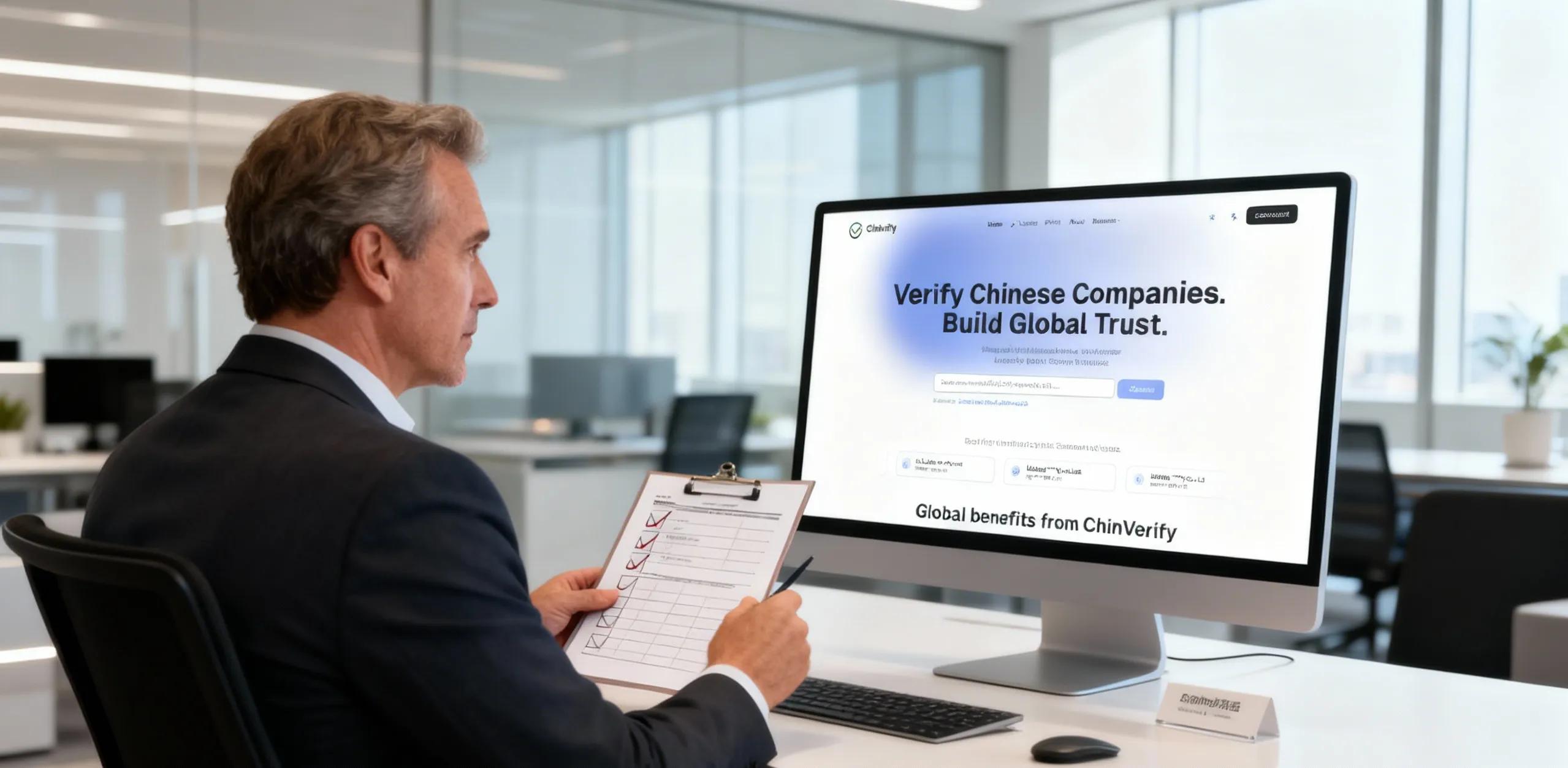
Buying from China can be a great move. More options. Better pricing. Faster scale.
But there is one problem: risk.
Not always “scam” risk. More often it’s the quiet kind. The kind that hurts your timeline and your cash flow.
A supplier looks fine. The salesperson is fast. The website looks real. You pay a deposit. Then something goes wrong:
- The company is listed as “abnormal operation.”
- There are enforcement records.
- There are many legal disputes.
You don’t need to be a lawyer. You need a repeatable process and an online verification tool like ChinVerify.
This article gives you that process. It uses simple words, short steps, and focuses on actions you can take before you pay.
Who this is for Buyers, importers, and sourcing teams who want a quick, practical way to reduce supplier risk before paying a deposit.
Verify Chinese supplier: what “verification” really means
Let’s make one thing clear:
- A supplier is the person you talk to.
- A company is the legal entity you pay.
Verification is about the legal entity. You want to confirm: 1. The company exists. 2. The company is active and in good standing. 3. The company is not showing strong public risk signals.
If you do these three things well, you reduce most avoidable losses.
China supplier verification checklist: the 10-minute action
Use this before you pay a deposit, before you sign a contract, or even before a sample order. Don't worry, ChinVerify can help you complete it online.
Quick Checklist
- [ ] Get the Chinese legal company name + Unified Social Credit Code (or Tax ID)
- [ ] Check the company status (active vs cancelled/revoked)
- [ ] Check abnormal operation records
- [ ] Check enforcement / dishonest records
- [ ] Scan legal cases (look for patterns, not one-off events)
- [ ] Check key company profile details for consistency
- [ ] Make sure contract + invoice + bank account match
- [ ] Use a risk-based payment plan and inspection steps
Step 1: Get the Chinese legal name (not the English name)
Ask for three items:
- Chinese company name (in Chinese characters)
- Unified Social Credit Code or Tax ID (18 digits)
- Business license copy
Why this matters English names are not unique. Sales teams often use brand names. Some sellers work under a trading name that is not the legal company. If you don’t have the Chinese legal name or USCC, your checks may be wrong.
🚩 Red Flags
- They refuse to share basic registration info.
- They keep changing the company name.
- They send personal ID info instead of company info.
✅ What to do
- Say it’s your standard onboarding process.
- Offer to sign an NDA if needed.
- If they still refuse, treat it as high risk.
Step 2: Check the company status (active vs not active)
This is the fastest high-signal check. You want to see a “normal / active” status.
You do not want to see:
- Deregistered / cancelled
- Revoked license
- Serious abnormal status
Why this matters If a company is not active, contract enforcement and refunds become harder. Unstable companies also have higher delivery risk.
✅ What to do
- If status is clearly bad: STOP.
- If status is unclear: Reduce order size and tighten payment terms.
Simple rule If you can’t confirm the supplier is active and normal, don’t send a large deposit.
Step 3: Check “abnormal operation” records
This is very important. Many importers skip it. A company can be listed for reasons like:
- Missing annual filings
- Registered address cannot be contacted
- Other compliance triggers
Why this matters It often means weak management. It can also mean you can’t reach them through official channels when problems happen.
✅ What to do
Ask three simple questions: 1. Why did it happen? 2. Is it resolved now? 3. Can you show proof of resolution?
🚩 Red Flags
- It is not resolved.
- It happened recently and they can’t explain it.
- They avoid the topic.
Pro Tip: If it is unresolved, don’t pay a big deposit.
Step 4: Check enforcement and “dishonest” records
This is one of the strongest risk signals. Enforcement records can mean the company (or key people) did not perform legal obligations.
Why this matters A company with active enforcement issues may struggle with cash flow, stable production, delivery on time, and refunds.
🔍 What to look for
- Is the record active or old?
- Is the amount big?
- Is there a “performed / not performed” status?
✅ What to do
If you still want to move forward:
- Start with a small order.
- Pay in steps.
- Pay after inspection.
- Keep deposits low.
Step 5: Scan legal cases (look for patterns)
One lawsuit is not always a deal-breaker. Many normal companies have disputes. But patterns matter.
🔍 Look for
- Many cases in a short time.
- Repeated case types (debt, contract, labor, quality, IP).
- The company often being the defendant.
- Cases that suggest non-payment or delivery failure.
✅ What to do
- Ask for a short explanation.
- Ask for recent customer references.
- Tighten inspection and acceptance terms.
🚩 Red Flags
- Many recent debt-related disputes.
- Many cases that match your risk (quality, late delivery, non-payment).
Step 6: Check core company profile details for consistency
This step helps you catch identity mismatch. Check:
- Legal representative
- Registered capital (and paid-in capital if available)
- Establishment date
- Registered address
- Business scope
- Historical names
Why this matters Mismatch can mean entity swapping, a shell company used only for payment, or a company that is not suitable for the product category.
✅ What to do
- Request factory video (live if possible).
- Use third-party inspection for the first order.
- Keep the first PO small.
Step 7: Make sure contract + invoice + bank account match
This step saves money. It is simple and prevents many disputes.
The Rule The name on the Contract, the Invoice, and the Bank Account should match the same legal entity.
🚩 Red Flags
- They rush you to pay a different entity.
- They suggest a personal account.
- They refuse to put bank info in writing.
✅ What to do
Pause. Verify the entity you will pay. If it doesn’t check out, don’t pay.
Chinese company verification: deal structure matters more than trust
Many buyers think verification is about “finding the perfect supplier.” In real life, you rarely get perfect information. Your best tool is your deal structure.
If signals are mixed, don’t argue. Just switch to “go with limits.”
A simple risk-based payment plan
- Small deposit, final payment after inspection.
- Split payment into 3 steps (start / mid / final).
- First PO small, scale after performance.
- Third-party inspection before shipment.
- Clear acceptance criteria in the contract.
Simple rule If verification signals are mixed, keep the first order small and tie payments to inspection and acceptance.
China business license check: copy-paste message for suppliers
Use this message. It’s polite, sounds normal, and protects you.
```text Hi, before we move forward with the PO, could you share: 1) your business license 2) your Chinese legal company name and Unified Social Credit Code or Tax ID 3) the bank account name for payment (it should match the legal company name)
We do this for all new suppliers as part of our onboarding process. Thanks. ```
Keep moving from research to a real verification decision
Use these next steps to compare related articles, open the right scenario, and continue into the company checks your team needs next.
Related supplier check workflows
Related capability pages
Start checking Chinese companies now
Run a company search in seconds and review official registration data and public risk signals before you commit to a supplier.