China Supplier Due Diligence Checklist 2026: 9 Things to Verify Before You Send Money
5/16/2026
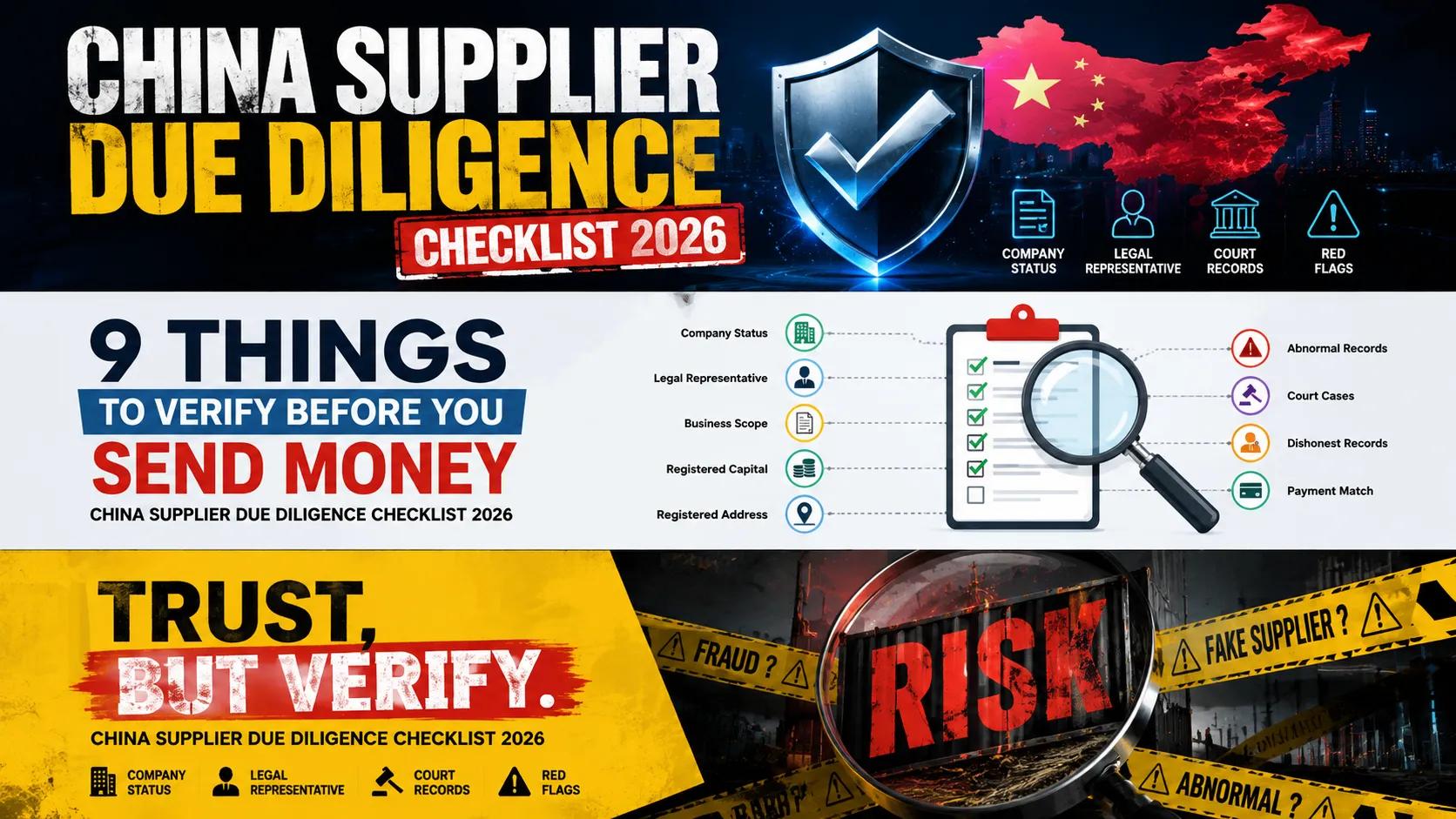
Finding a supplier in China is easier than ever. You can find dozens of options in a few clicks.
But finding the right supplier—one that is legally registered, operationally stable, and safe for your capital—is where the real work begins.
A company might have a sleek website, a "Gold Plus" status on sourcing platforms, and a sales rep who responds to WhatsApp in seconds. While these are good for communication, they aren’t proof of a healthy business. Before you sign a purchase order or send a deposit, you need to look at the official data.
This guide provides a practical China supplier due diligence checklist for 2026. Whether you are a solo Amazon seller or a veteran procurement manager, these steps help reduce your exposure to risk.
Why "Silent Due Diligence" Matters Now
In global trade, information asymmetry is your biggest enemy. Suppliers often know their own risks (like pending lawsuits or financial instability), but they won't volunteer that info.
"Silent due diligence" is the practice of checking a supplier's official records without alerting them. This allows you to keep your negotiation leverage while you decide if the company is a fit. If you find a major red flag early, you can walk away before you’ve wasted weeks on onboarding.
1. Verify the Official Chinese Company Name
Everything starts here. Never rely solely on an English name. In China, only the Chinese name is legally binding for registration.
A single factory might use three different English names for marketing. The Chinese name is the "key" that unlocks their official government records. If a supplier is hesitant to give you their Chinese name or a copy of their business license, consider that a significant warning sign.
2. Check the Unified Social Credit Code (USCC)
The USCC is an 18-digit ID number. It’s essentially the "Social Security Number" for a Chinese business. It ensures you are looking at the right entity and not a different company with a similar-sounding name. When you perform your China company verification, always match the USCC across the business license, the contract, and the proforma invoice.
3. Confirm the Company Status
A company can exist in the registry but still be "Revoked" or "Cancelled."
- Active/Existing: The baseline requirement.
- Abnormal Operation: This usually means the company couldn't be contacted at its registered address or failed to file annual reports.
While an "Abnormal" status doesn't always mean a company is disappearing, it suggests operational friction that could lead to delays in your production.
4. Review the Legal Representative
The Legal Representative is the individual authorized to act on the company's behalf. If this person is also listed on "Dishonest Debtor" records or has several other failing businesses, it may reflect on the leadership of your supplier. Checking this helps you see the human element behind the corporate paper.
5. Registered Capital vs. Paid-in Capital
Registered capital is what the shareholders intended to invest. Paid-in capital is what has actually been contributed.
- The Insight: If a supplier claims to be a massive manufacturer but has a very low paid-in capital, there might be a mismatch between their "marketing story" and their financial reality. It’s not a deal-breaker on its own, but it’s a piece of the puzzle.
6. Read the Business Scope
Does the supplier actually have the right to sell what they are offering? If you are buying medical equipment, but the supplier’s registered scope only covers "textile trading," you are looking at a middleman—or worse, a company operating outside its legal bounds.
7. Compare the Registered vs. Operating Address
It’s common for a company to be registered in a downtown office but have a factory in an industrial zone. However, if they claim to be a factory but their registered address is a shared virtual office space in a residential building, you should ask for a video walkthrough or a factory audit.
8. Look for Business Abnormality Records
Think of these as "administrative yellow cards." They are issued by the government for various compliance failures. A history of repeated abnormalities may indicate a lack of professional management.
9. Check Court Cases and Dishonest Debtor Records
Litigation happens in business, but patterns matter.
- Contract Disputes: If they are frequently sued by customers for non-delivery, take note.
- Dishonest Debtor Records: This is a specific public signal in China for entities that have failed to comply with court orders. It is a high-level risk signal that suggests the company may have trouble fulfilling financial obligations.
Bonus: The Payment Beneficiary Check
This is the most practical step. The name on the bank account should match the verified Chinese company name. If they ask you to pay a "partner company" in a different country or a personal account for the "boss," you lose almost all legal protection if the deal goes wrong.
A Simple China Supplier Due Diligence Checklist
| Check Item | Why It Matters |
|---|---|
| Official Chinese Name | Unlocks all official records. |
| USCC Number | Ensures you have the right entity. |
| Company Status | Confirms they are legally allowed to trade. |
| Legal Rep Records | Checks the credibility of the person in charge. |
| Business Scope | Confirms they are authorized to sell that product. |
| Abnormality History | Shows a history of compliance (or lack thereof). |
| Litigation/Court Records | Identifies potential financial or contractual instability. |
How ChinVerify Can Help
Manually navigating Chinese registries is difficult if you don't speak the language or understand the legal system. ChinVerify is designed to bridge that gap.
In about 30 seconds, you can get a snapshot of a company’s risk signals. Tools like ChinVerify help sourcing teams organize their due diligence by pulling public signals into a readable report. It’s a practical first step to take before you invest in an expensive third-party factory audit or send a large deposit.
The "Verify First" Strategy
Professional suppliers usually expect due diligence. They know that serious buyers do their homework. If a supplier tries to rush you or avoids providing basic registration info, they might be hiding an operational risk.
By integrating a quick check into your workflow, you protect your company’s capital and its reputation.
Ready to screen your next partner? Try a quick check on ChinVerify and see the data behind the name.
Keep moving from research to a real verification decision
Use these next steps to compare related articles, open the right scenario, and continue into the company checks your team needs next.
Related supplier check workflows
Start checking Chinese companies now
Run a company search in seconds and review official registration data and public risk signals before you commit to a supplier.