Factory or Trading Company? How to Verify Your Chinese Supplier in 30 Seconds
3/27/2026
If you’ve spent any time on Alibaba, Global Sources, or Made-in-China, you’ve seen the claims. Every profile features high-resolution photos of assembly lines, workers in lab coats, and massive warehouses. Everyone claims to be "The Leading Manufacturer."
But in reality, a huge percentage of these "factories" are actually trading companies.
Now, let’s be clear: trading companies aren't necessarily "bad." They can offer better service, lower MOQs, and a wider product range. But if you are looking for direct factory pricing, technical customization, and strict quality control, you need to know exactly who is on the other end of that email.
How do you cut through the marketing fluff and find the truth? It all comes down to the data.
Why the "Middleman Trap" Happens
In the world of international trade, there is a massive "information asymmetry." A supplier knows their own operational health, but you—the buyer—are often kept in the dark.
Many sourcing teams fall into what we call the "sunk cost trap." You spend weeks negotiating, samples are sent, and you’re ready to pay. By the time you realize they are a middleman adding a 20% markup, you feel psychologically forced to proceed because you've already invested so much time.
The best way to avoid this is to verify before you start the deep-dive negotiations.
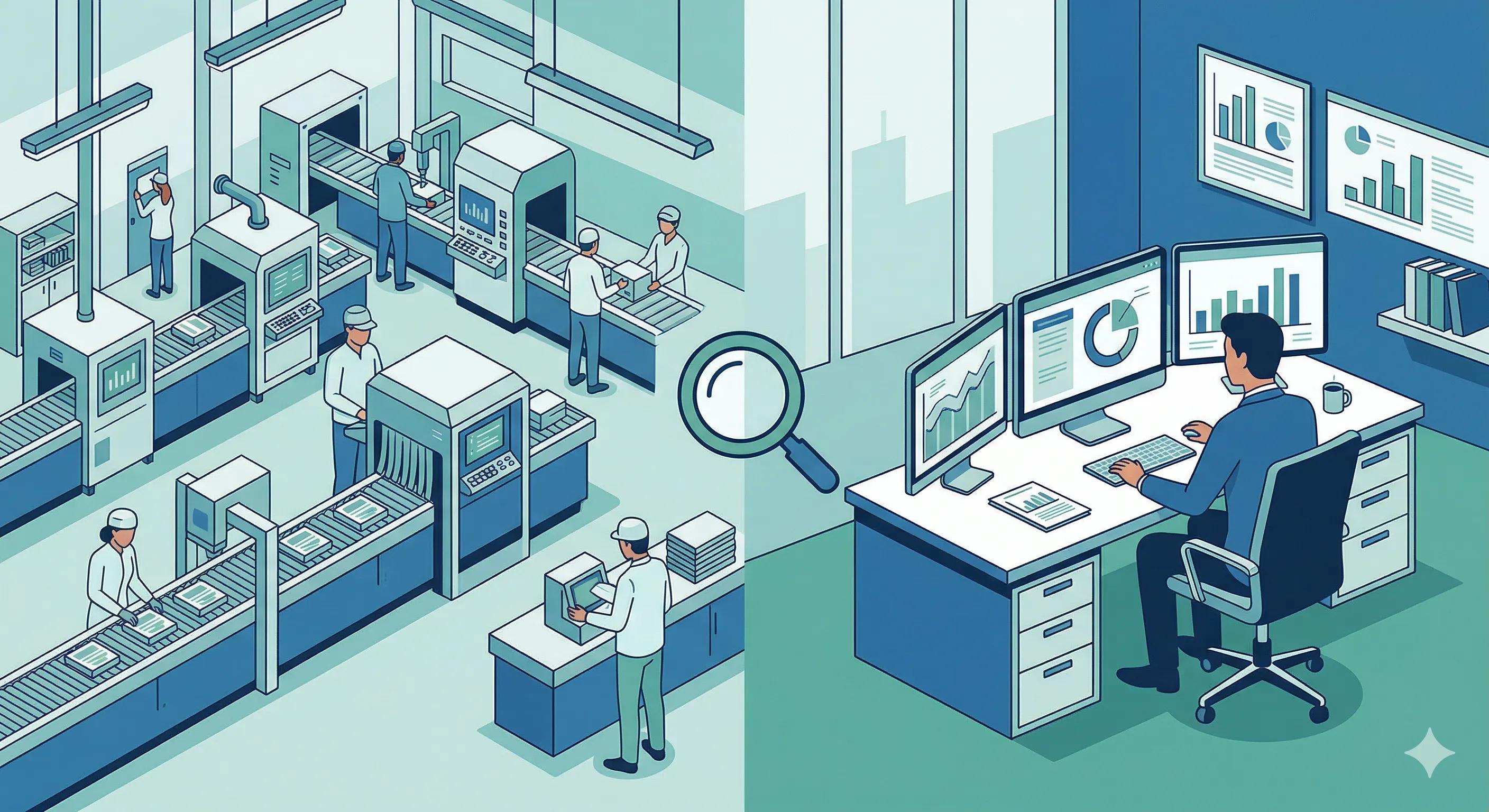
The 3 "Red Flags" of a Middleman
Before you even look at official records, these three signs are often dead giveaways:
- The Product Catalog is Too Diverse: If they sell everything from LED lights to yoga mats to kitchen knives, they are almost certainly a trading company. Real factories specialize.
- The Location: Is the office in a high-rise in the middle of a major city like Shanghai or Shenzhen? Real factories are usually in industrial zones on the outskirts of cities (like Foshan, Ningbo, or Dongguan).
- The Name: Many trading companies include words like "Trading," "Commercial," or "Industrial" in their English name, though they are getting better at hiding this.
The Secret is in the "Business Scope"
In China, every legal company has a "Business Scope" (经营范围) registered with the government. This is the most reliable way to tell what they are legally allowed to do.
If a company is a real factory, their business scope will include words like "Manufacturing" (制造), "Processing" (加工), or "Production" (生产). If their scope only mentions "Wholesale" (批发) or "Import and Export" (进出口), they are legally a trading entity. While they might have a "close relationship" with a factory, they are not the ones making your goods.
How to Check Without Getting Your Hands Dirty
Manually digging through Chinese government registries is difficult if you don't speak the language or know where to look. This is where a "Silent Due Diligence" approach becomes your best friend.
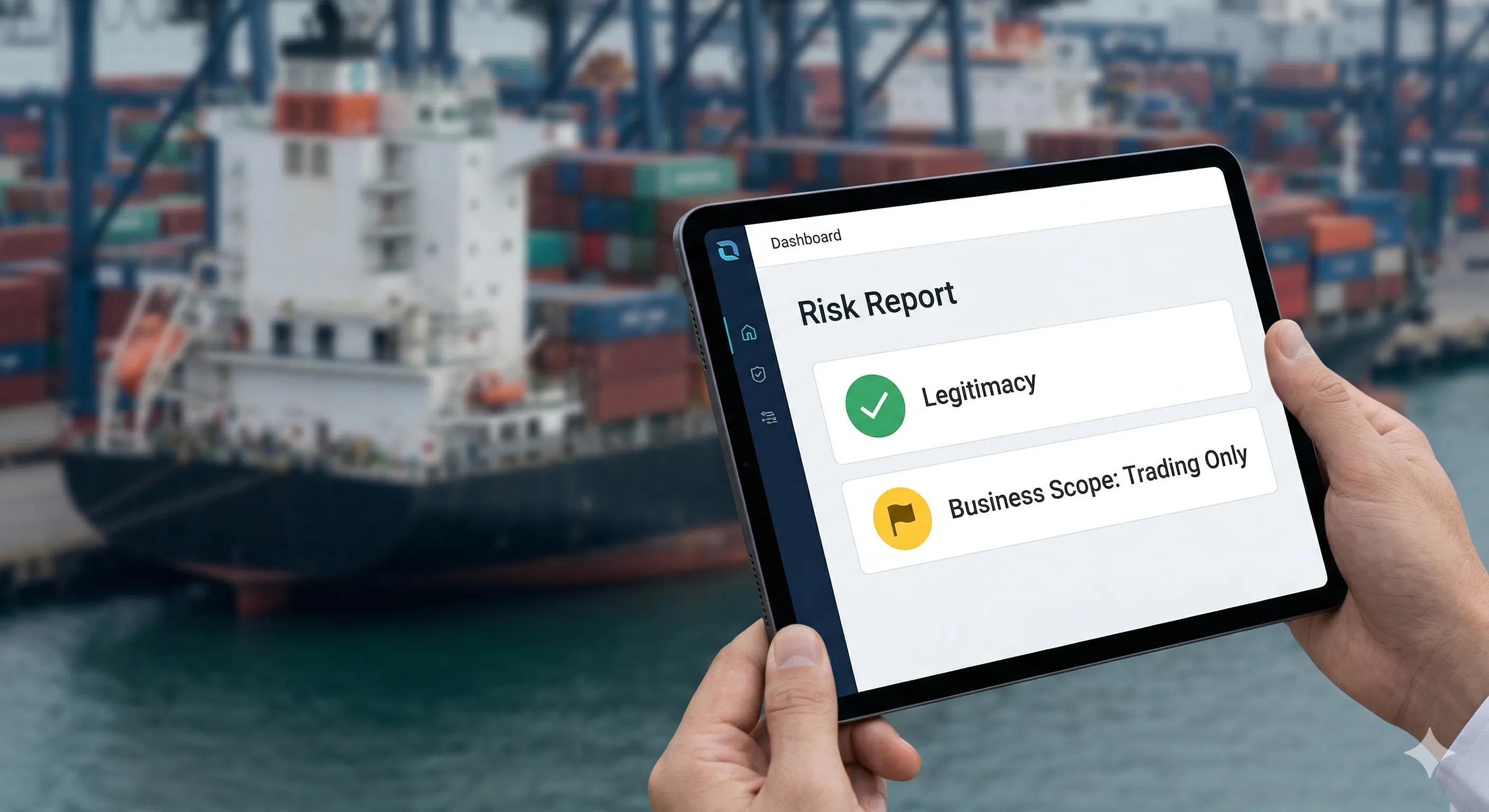
Using a tool like ChinVerify allows you to pull these official records in seconds. Instead of asking the supplier for their business license (which can be photoshopped), you pull the data directly from the official registry.
Why "Silent" matters: If you ask a supplier too many probing questions early on, you lose negotiation leverage. By verifying them quietly in the background, you maintain the upper hand. You can confirm if they are "Active" and "Fit for Business" before you even send your first RFQ.
Is a "Trading Company" Always a Risk?
Not necessarily. Some trading companies provide excellent value by managing the logistics and quality control for smaller factories that don't have an export license.
The risk isn't the middleman; the risk is the lack of transparency. If a supplier claims to be a factory but is actually a trader, what else are they being "flexible" with? Are they hiding a lack of insurance? Do they have a history of legal disputes?
When you run a quick check, look for more than just the "Factory" label. Check for:
- Abnormal Operation Signals: Are they on a government watchlist?
- Litigation Records: Do they have a pattern of being sued by other buyers?
- Registration Capital: Is it a "shell company" with almost no capital, or a serious enterprise?
The "Verify First" Culture
The most successful sourcing teams have a simple rule: Verify First, Pay Later. By spending 30 seconds running a screening at the "pre-payment, pre-contract" phase, you insulate your business from the most common pitfalls of cross-border trade. It’s about moving from reactive crisis management to proactive supply chain resilience.
Don't wait until your deposit is sent to wonder if your "factory" actually exists. Get the data, verify the legitimacy, and pay with confidence.
Keep moving from research to a real verification decision
Use these next steps to compare related articles, open the right scenario, and continue into the company checks your team needs next.
Related supplier check workflows
Start checking Chinese companies now
Run a company search in seconds and review official registration data and public risk signals before you commit to a supplier.