The 20% "Middleman Tax": How One Importer Discovered Their "Factories" Were Actually Trading Companies
4/9/2026
Six years in the sourcing game and you think you’ve seen it all. You know how to play the Alibaba field, you’ve mastered the art of the haggle, and you’ve built what feel like bulletproof relationships with your regular suppliers.
But a recent story shared by a veteran importer on a sourcing forum is a wake-up call for everyone. Despite running twenty orders a year for over half a decade, they just realized three of their "go-to factories" weren't factories at all.
They were trading companies.
The price of that mistake? A quiet 18% to 24% markup on every single order. Even with "loyalty discounts" thrown in to keep them happy, the importer was paying a massive "middleman tax" that never showed up on a spreadsheet.
If your lead times shift without warning or your quality fluctuates between batches, you’re likely in the same boat. Here is how to tear off the mask.
The Illusion of the "Loyalty Discount"
The most genius part of this story isn’t the price gap—it’s how the trading companies kept the buyer from looking elsewhere.
Many middlemen offer "loyalty programs" or small kickbacks for repeat customers. In this case, a $10 discount for every $100 spent made the pricing feel competitive. But when the buyer finally tracked down the actual manufacturers, the base price was so much lower that the "loyalty discount" looked like pocket change.
Trading companies can provide value through consolidation, but when they lie about being the manufacturer, they create a dangerous information asymmetry. They know exactly how their operations are doing; you’re left guessing in the dark.
3 Red Flags Your "Factory" is a Middleman
Truth usually hides in the technical details. If your supplier shows these cracks, pay attention:
- The Technical Blank Stare: If you ask a hyper-specific question about a machine setting or a nuanced production step and the rep needs "to check and get back to you," they aren't on the factory floor. Actual manufacturers live and breathe their technical specs.
- The Shifting Schedule: When a factory owns the lines, they control the clock. When a trading company is "pulling from multiple sources," your order gets bumped the second a larger client walks in. That’s when you start hearing excuses about "unexpected delays."
- The Quality Lottery: Batch A looks perfect, but Batch B has slightly different stitching or a weird plastic texture. This is a dead giveaway that the supplier is outsourcing your order to different small workshops depending on who is cheapest that week.
The High Cost of "Manual" Verification
To confirm their suspicions, this importer spent $340 on verification samples and wasted hours on awkward factory video calls.
While video calls are a decent tool, they are easily faked. A clever agent can walk through a partner's factory, wave at the staff, and claim it’s theirs. More importantly, requesting these calls tips your hand. It tells the supplier you don’t trust them, which kills your leverage before you even get to the negotiating table.
A Faster, "Silent" Way to Verify
The smartest buyers avoid the "Sunk Cost Trap"—investing weeks into a supplier only to find out they are a high-risk middleman right before the deposit is due.
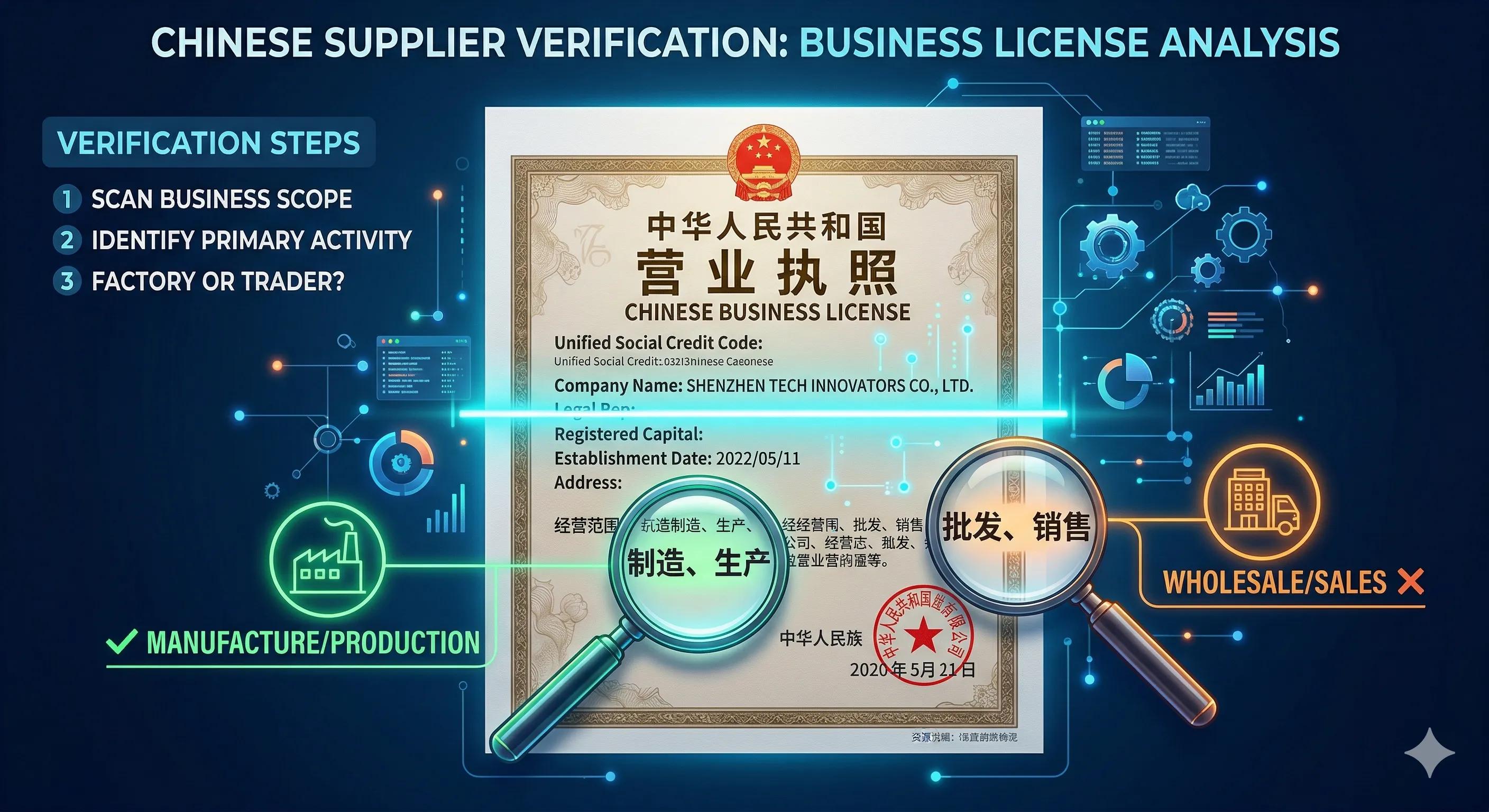
The answer lies in the Official Business Scope (经营范围). In China, every registered business has a government-mandated scope. If a company is a real manufacturer, their scope must explicitly include terms like "Production" (生产), "Manufacturing" (制造), or "Processing" (加工).
If their scope only lists "Wholesale" or "Sales," you are talking to a middleman. Period.
Moving Toward a "Verify First" Culture
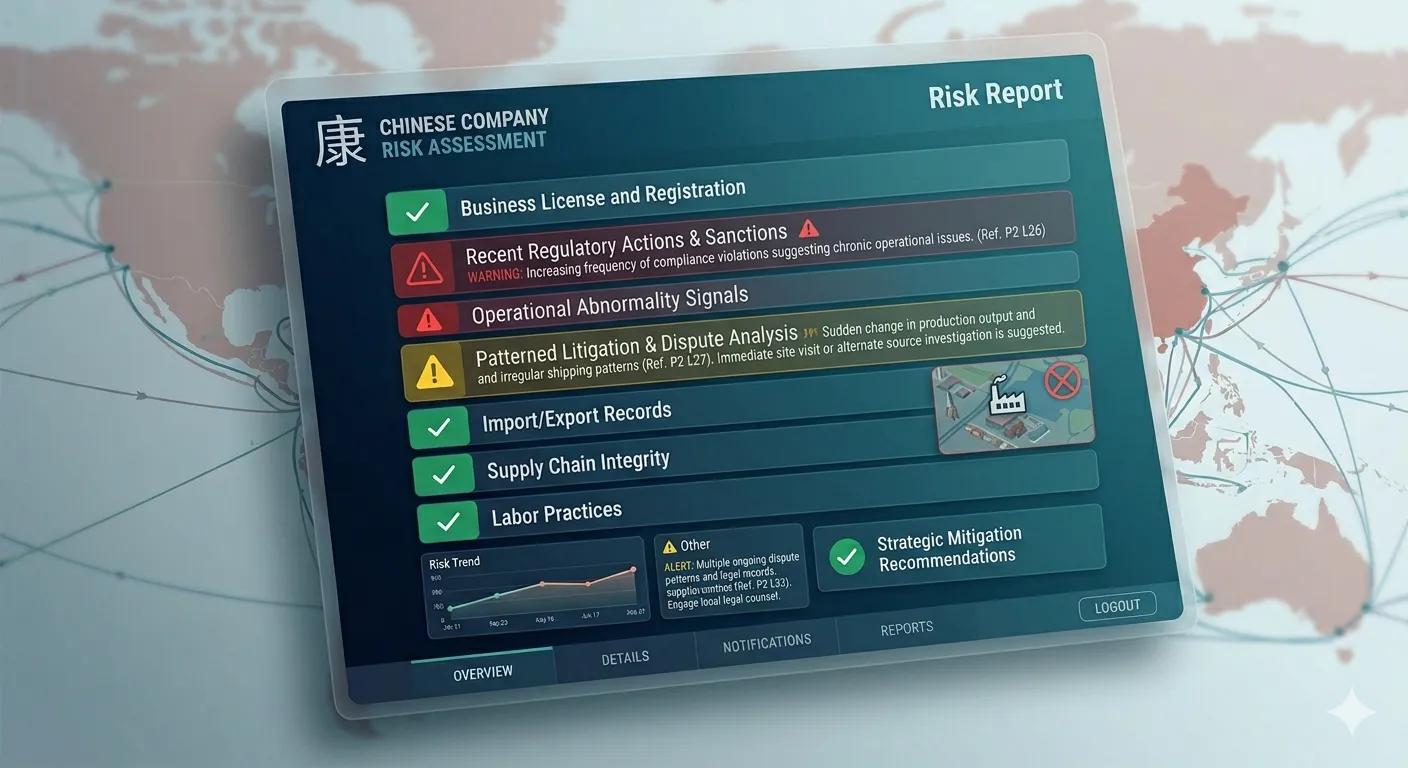
Modern sourcing teams are moving away from gut feelings. By checking official registration data, litigation history, and "abnormal operation" signals before the first negotiation, you can:
- Protect your margins: Know exactly who is in the supply chain and negotiate at the source.
- Run "Silent Due Diligence": Check a supplier’s legal standing without them ever knowing you looked. Information is your biggest leverage.
- Avoid Defaults: See if a company has a pattern of legal disputes or "dishonesty records" that could put your deposit at risk.
Tools like ChinVerify are built to turn this deep-dive research into a 30-second check. It allows you to move past the guesswork and see the evidence-based reality of a supplier before you commit a single dollar.
The Bottom Line
A trading company isn't always a bad partner, but dishonesty is a massive risk signal. If they are hiding their identity as a middleman, what else are they hiding about quality or compliance?
Don't wait for a quality disaster or a 24% price hike to start asking questions. Start with the data, verify the status, and pay with confidence.
Keep moving from research to a real verification decision
Use these next steps to compare related articles, open the right scenario, and continue into the company checks your team needs next.
Related supplier check workflows
Start checking Chinese companies now
Run a company search in seconds and review official registration data and public risk signals before you commit to a supplier.