Registered Capital vs Paid-In Capital in China: What Buyers Should Know
6/23/2026
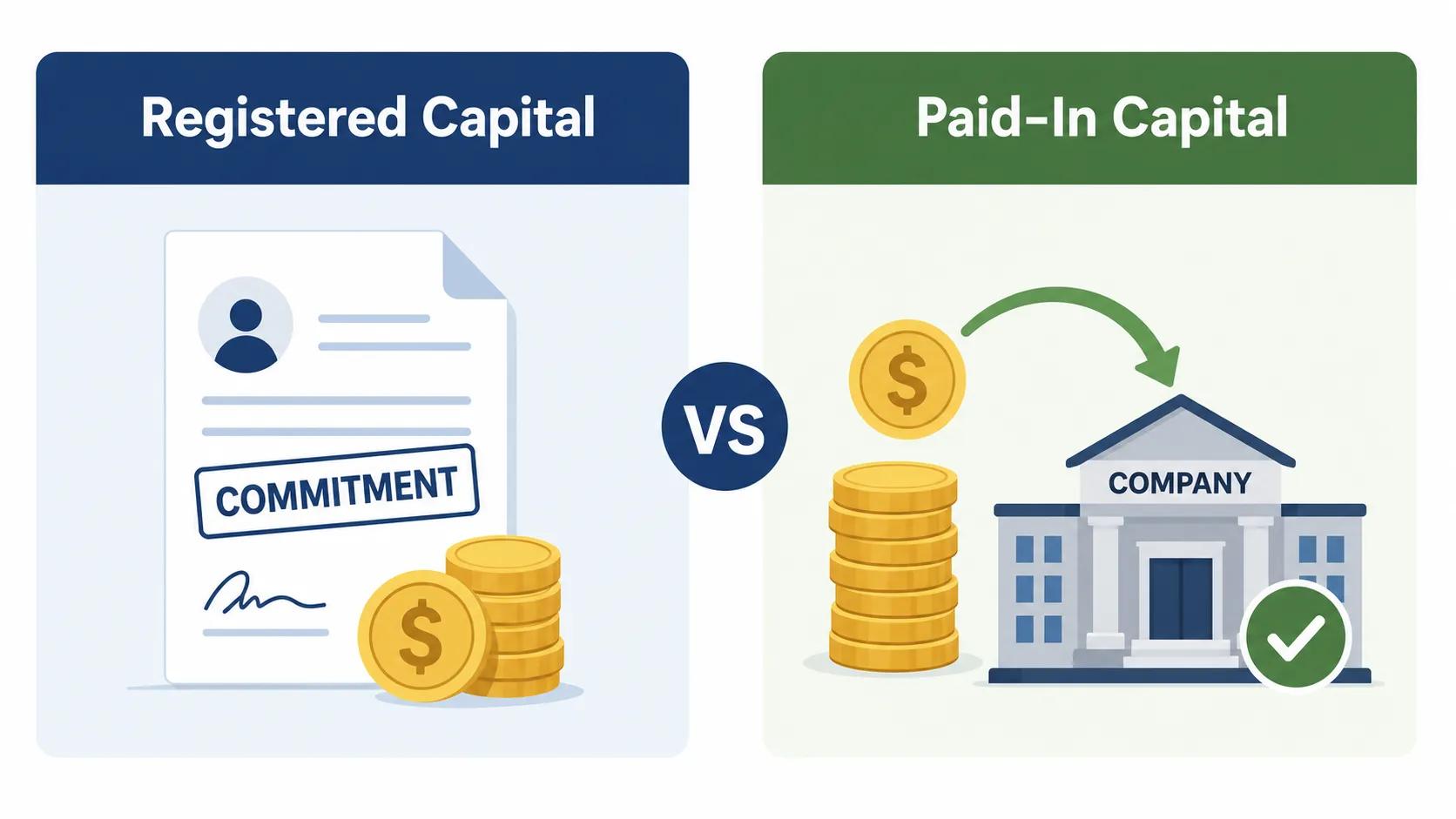
When you check a Chinese company’s registration information, two fields often stand out: registered capital and paid-in capital.
For international buyers, these numbers can look important. A supplier may show registered capital of RMB 10 million, RMB 50 million, or even more. At first glance, it may seem like a direct sign of company size or financial strength.
But that is not always the right interpretation.
In China, registered capital and paid-in capital have specific meanings. They can be useful signals when you review a supplier, but they should not be treated as simple proof that a company is strong, safe, or reliable. Understanding the difference can help you read Chinese company records more carefully and avoid common mistakes during supplier due diligence.
What Is Registered Capital in China?
Registered capital is the amount of capital that a company’s shareholders have committed to contribute to the company.
In simple terms, it is the amount declared in the company’s registration records. It reflects the shareholders’ subscribed capital commitment, not necessarily the amount of money currently sitting in the company’s bank account.
For example, if a Chinese company shows:
- Registered capital: RMB 10 million
This does not automatically mean the company has RMB 10 million in cash, assets, or available operating funds. It means the shareholders have registered a capital commitment of that amount under the company’s official registration information.
What Is Paid-In Capital?
Paid-in capital refers to the amount of capital that shareholders have actually contributed to the company.
For example, a company may show:
- Registered capital: RMB 10 million
- Paid-in capital: RMB 1 million
This means the shareholders committed to RMB 10 million in registered capital, while RMB 1 million has been actually contributed according to available company records.
In some cases, paid-in capital may be shown as zero or may not be fully disclosed in the same way across different public data sources. This does not automatically mean the company is fake or unsafe. It simply means the buyer should interpret the information in context.
Registered Capital vs Paid-In Capital in China
The key difference is simple:
Registered capital is the committed amount. Paid-in capital is the actually contributed amount.
This distinction matters because many buyers mistakenly read registered capital as if it were a direct measure of financial strength. In reality, a company with high registered capital may not have paid in the full amount. A company with lower registered capital may still be a real operating business with stable trade activity.

Here is a practical comparison:
| Term | Meaning | What Buyers Should Remember |
|---|---|---|
| Registered Capital | Capital amount committed by shareholders in company registration records | Not the same as cash on hand or guaranteed financial strength |
| Paid-In Capital | Capital actually contributed by shareholders | Useful to review, but not enough on its own to judge supplier reliability |
Both fields are worth checking, but neither should be used alone to decide whether to work with a supplier.
Why Registered Capital Can Be Misunderstood
Registered capital is easy to overinterpret.
A buyer may see a large number and assume the supplier is financially strong. But that number may only reflect a shareholder commitment. It does not necessarily show current revenue, export experience, factory capacity, product quality, or ability to fulfill an order.
For example, a trading company with RMB 20 million registered capital may still be a small operation. A factory with RMB 2 million registered capital may have years of production experience and stable customers.
That is why registered capital should be treated as one part of the company profile, not a final conclusion.
Why Paid-In Capital May Be Lower Than Registered Capital
It is common to see paid-in capital lower than registered capital.
This can happen for several reasons. Shareholders may not have contributed the full registered amount yet. The company may still be within a permitted contribution period. The public record may also not show the latest capital contribution details in a way that is easy for overseas buyers to interpret.
A lower paid-in capital figure can be a signal worth reviewing, especially for large orders or long-term cooperation. But it is not necessarily proof of a problem.
The better question is not simply, “Is the paid-in capital low?”
A better question is:
“How does this figure compare with the company’s age, business scope, order size, claimed capacity, legal records, operating status, and other public signals?”
How Buyers Should Use These Fields in Supplier Checks
When reviewing a Chinese supplier, registered capital and paid-in capital can help you build a more complete picture.
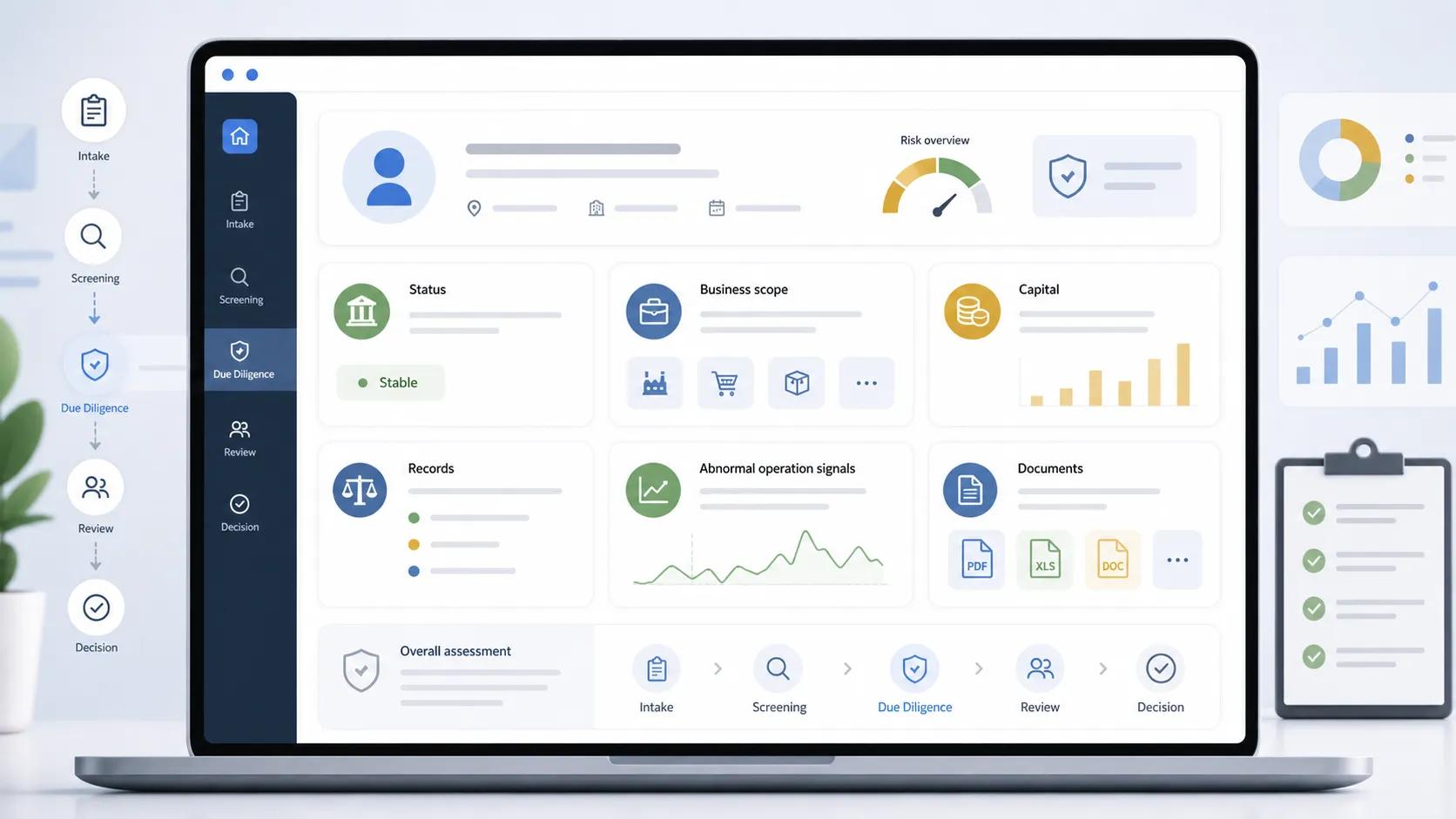
They are most useful when compared with other information, such as:
- Company establishment date
- Current registration status
- Business scope
- Legal representative and shareholder information
- Address and contact consistency
- Abnormal operation records
- Legal-case clues
- Dishonesty-related records, if any
- Website, invoices, contracts, and payment account details
- Factory audit, samples, references, and trade history
For example, if a supplier claims to be a large manufacturer with many years of export experience, but the company is newly established, has very low paid-in capital, a limited business scope, and inconsistent contact information, that combination may deserve closer review.
On the other hand, if a company has modest registered capital but a consistent business history, matching documents, normal operating status, and verifiable trade activity, the capital figure alone may not be a major concern.
Common Mistakes Buyers Make
One common mistake is assuming that high registered capital means the supplier is safe. It does not.
Another mistake is assuming that low paid-in capital means the supplier is unreliable. That is also too simple.
A third mistake is looking at capital figures without checking the company’s broader public profile. In supplier due diligence, single data points rarely tell the whole story. The pattern matters more than one number.
Buyers should also be careful when comparing companies across industries. A consulting company, trading company, machinery manufacturer, and chemical supplier may have very different capital structures and business realities.
A Practical Sourcing Scenario
Imagine you are comparing two suppliers.
Supplier A shows RMB 50 million in registered capital, but only limited public information, a recently established company record, inconsistent address details, and no clear evidence of production capacity.
Supplier B shows RMB 3 million in registered capital, but has been operating for several years, has consistent registration information, a business scope matching the products offered, normal company status, and documents that align with the quotation and contract.
Supplier A may look stronger at first because of the larger registered capital number. But after a fuller review, Supplier B may appear more consistent.
This does not mean Supplier B is automatically safe or Supplier A is automatically risky. It means the capital figures should be interpreted alongside other due diligence signals.
How ChinVerify Can Help
When buyers need to verify a Chinese company, the challenge is often not just finding one number. It is understanding how different public signals fit together.
Tools like ChinVerify can help buyers review company registration data, operating status, abnormal-operation signals, legal-record clues, dishonesty-related records, and other public company indicators more efficiently.
This can make the first-pass supplier check easier, especially when screening multiple companies before requesting samples, arranging inspections, or placing an order.
Final Takeaway
Registered capital and paid-in capital are useful fields in Chinese company records, but they are often misunderstood.
Registered capital shows the amount shareholders have committed to contribute. Paid-in capital shows the amount actually contributed, based on available records. Neither number proves that a supplier is reliable, financially strong, or risky by itself.
For better China supplier due diligence, buyers should treat these figures as part of a broader review. Look at company status, business scope, establishment date, legal-record clues, abnormal-operation signals, documents, trade history, and real-world verification steps before making a decision.
Understanding registered capital vs paid-in capital in China helps buyers ask better questions, avoid false confidence, and make more informed supplier-screening decisions.
Keep moving from research to a real verification decision
Use these next steps to compare related articles, open the right scenario, and continue into the company checks your team needs next.
Related supplier check workflows
Start checking Chinese companies now
Run a company search in seconds and review official registration data and public risk signals before you commit to a supplier.